
Lincoln County Court Calendars Explained
Every Lincoln County trial setting belongs to the court that owns the case. Felonies, major civil matters, and lower-court appeals live in Circuit Court. Family Court takes the domestic side. Magistrate Court covers misdemeanors, felony preliminary hearings, traffic cases, small claims, unlawful detainer, and other limited matters. A case docket may list the next event. The judiciary posts no public daily or weekly Lincoln County trial-calendar page.
A statewide case lookup helps you find a case and its most recent event. It is not a clerk-confirmed calendar. The Judiciary's Lincoln County directory gives contact details. It covers the Circuit Clerk, Magistrate Clerk, and Family Court. Pull the case record first. Then ask the right office for the final date, time, room, and judge.
No Lincoln Daily Court Calendar
Lincoln County offers no stand-alone public daily trial docket, night-court calendar, or county scheduling portal. WVPASS and MCRSearch are case-search systems instead. Docket events may appear there, yet neither serves as a guaranteed live daily calendar. When a date cannot be confirmed online, posted courthouse dockets still matter. A direct call to the court does too.
Best check: Use the newest docket event as a lead, not the last word. Ask the correct clerk or Family Court coordinator to confirm a setting that controls an appearance.
Have the full party name and case number ready before you call or stop by. That information helps the clerk pull the right court file. Similar names trip up even careful staff. A case number solves that fast. It speeds up any Lincoln County docket search you make in person or by phone. If the party has an attorney, counsel is another direct route to court dates. Lawyers often get hearing notice through the filing system.
Finding Your Court Date
Match the channel to the court level. Circuit public records start with WVPASS. Magistrate information starts with MCRSearch. If the court level is unknown, read the complaint, citation, summons, notice, or prior order first, since the caption usually names the court and supplies a case number.
- Identify Circuit, Family, or Magistrate Court from the newest notice.
- For Circuit records, check WVPASS. For Magistrate information, check MCRSearch.
- Read the newest event, not an earlier date that may have been replaced.
- Call the Circuit Clerk, Magistrate Clerk, or Family Court coordinator. Counsel can confirm a represented party's date.
- If doubt remains, ask about courthouse postings or visit the clerk's counter.
MCRSearch is free and returns up to 30 matches, though it shows no filed documents. WVPASS covers public Circuit civil and criminal documents from 1999 forward, excluding sealed filings and juvenile cases. Remember, a missing result does not prove that no hearing exists.
Lincoln Family Calendar Contact
Family settings follow their own route. Lincoln County shares the Tenth Family Court Circuit with Boone County. The local Family Court page lists a coordinator at the courthouse, extension 273. That contact answers schedule questions on divorce, custody, support, paternity, visitation, name-change, and other Family Court matters.
Access to family records is also tighter. Public indices and orders do not open every pleading, exhibit, recording, or transcript to view. A party can receive information an unrelated requester cannot. Give enough detail to identify the case. Let the coordinator or clerk explain what may be released.
How to Read a Court Setting
A setting is a planned court event. It is not a promise the case will end that day. Read the whole line and compare later entries before assuming anything. Official appellate calendars list the docket date, case number, case name, and status. Lincoln trial records may use other labels. Ask the clerk about any blank or unclear field.
| Date | The day now assigned; check for a later reset or continuance. |
|---|---|
| Time | The stated start or docket-call time, not always the exact hearing time. |
| Courtroom | The room or location; confirm it because several courts use the courthouse. |
| Judge | The judicial officer assigned to the event. |
| Setting Type | The purpose, such as arraignment, pretrial, motion hearing, or trial. |
A docket call groups several matters for the court to address in one session. Your individual case may come up later in the queue. Arrive at the time on your notice unless court staff tells you otherwise.
Lincoln Court Calendar Terms
Short labels can change what a court date means. Read them alongside the latest order. They describe schedule status, never the final result.
- Continued
- The event moved to a later date by court action.
- Reset
- A new setting replaces an old one. It does not dismiss the case.
- Withdrawn
- A listed request or event was removed; the case may continue.
- Docket call
- A session where the court calls a group of cases and checks readiness.
- Hearing
- An event on a motion, evidence, status issue, or other set matter.
The Supreme Court of Appeals and the Intermediate Court of Appeals keep separate calendars. Once an appeal is filed there, its appellate docket stands apart from the Lincoln trial-court docket.
Continuances, Resets, and Cancellations
A continuance postpones an event. It does not erase the charge, claim, order, or next duty. The change may show up as a new docket entry or a signed order. If an old date conflicts with a new one, check the latest order. You can also call the clerk.
Online records may lag behind a late change. Mailed notices can arrive after a schedule shifts. Confirm with the court whenever two sources disagree. Also confirm when no new date appears after a continuance. Remote hearings deserve the same care. They are full court proceedings, and only access details supplied by the court should be used.
Do not read a removed event as proof of cancellation. The matter may have a new date, a transfer, or an order. The results list may not show it. Ask whether the case is off the docket, reset, or still set under another entry. That one short question can prevent a missed appearance.
Lincoln Appeals Use Other Calendars
Appeals run on their own schedules. The Supreme Court current docket and the Intermediate Court calendar publish hearing dates. Each covers its own court. Qualifying civil, family, workers' compensation, administrative, and guardianship appeals go to the Intermediate Court. Criminal, juvenile, abuse-and-neglect, domestic-violence, and other assigned matters go to the Supreme Court. The official ICA page shows the statewide layout of appellate dates.
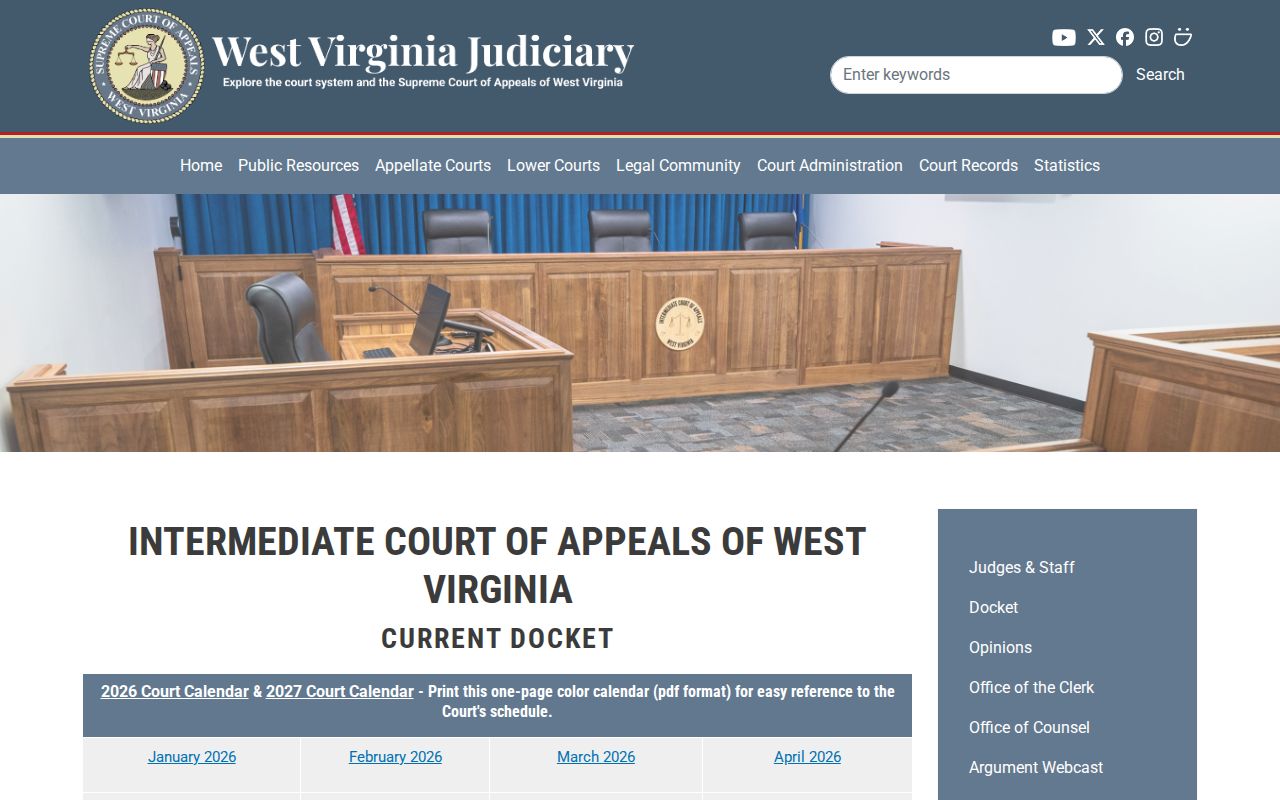
Those appellate fields help you read an appeals docket, though a Lincoln trial date still calls for its own check.
Plan for Lincoln Hearing Day
The Lincoln County Courthouse sits at 8000 Court Avenue in Hamlin. County offices open weekdays from 8:30 a.m. to 4:30 p.m. Several court functions share that one building. Confirm your room before the date and leave time for security screening. An official history notes a metal detector was installed after a 1990 courtroom shooting.
Carry the notice, your case number, and any papers the court told you to bring. Staff at the clerk's office can confirm scheduling details for a Lincoln County hearing. They cannot offer legal advice. They also cannot predict when your matter will be called. Raise any access needs with the right office ahead of time.
If You Miss a Court Setting
Act at once if you miss a court setting. Call the court, and your counsel too if you have one, then ask whether an order, warrant, or new date was entered. A passed date alone never means the case ended.
Missed a setting? A missed appearance can lead to a warrant or other court action.
For a motor-vehicle matter, West Virginia law also allows notice to the Division of Motor Vehicles after a failure to respond or appear.
Call the proper Lincoln County clerk and seek legal advice about the next step.
Start with the case number. MCRSearch matters go to the Magistrate Clerk, WVPASS cases to the Circuit Clerk, and family matters to the Circuit Clerk or the Family Court coordinator.