
Getting Lincoln County Court Records
Two clerks, two sets of dockets. The Lincoln County Circuit Clerk holds Circuit civil and criminal files and stores Family Court files under Family Court Rule 5. The Lincoln County Magistrate Court Clerk keeps the Magistrate records: criminal cases, traffic tickets, small claims, unlawful detainer, personal-safety orders, and emergency protective orders. Pick the right custodian before mailing anything. And remember the County Clerk is a separate office entirely, handling land records, wills, births, deaths, marriages, elections, and other county business.
- Identify the court, party name, approximate year, case type, and case number if known.
- Search WVPASS for public Circuit documents or MCRSearch for Magistrate case information.
- Choose online access, the clerk's counter, telephone contact, or a mailed written request. A courthouse public terminal is another search channel.
- Describe the exact docket sheet, order, judgment, pleading, or other document needed.
- Ask the clerk to quote search, copy, certification, and mailing costs before payment.
West Virginia court-record law backs your right to inspect and copy public material. The clerks' own procedures back it too. A quick phone call can settle custody and price. But the clerk may still want the request in writing before doing the work. If you mail it in, include contact information and a delivery address. Keep the ask narrow. Name the case and the document rather than sending an open-ended fishing request.
Lincoln Circuit Clerk Copy Counter
You will find the Circuit Clerk inside the Lincoln County Courthouse at 8000 Court Avenue, Hamlin, West Virginia 25523. The state county directory gives P.O. Box 338 for mail and telephone 304-824-7990, extension 248. Listed county office hours run 8:30 a.m. to 4:30 p.m. on weekdays.
Lincoln County Circuit Clerk
Lincoln County Courthouse
8000 Court Avenue
Hamlin, WV 25523
Mail: P.O. Box 338
304-824-7990, ext. 248
The local clerk page describes the office as keeper of every Circuit Court lawsuit, criminal or civil. Orders and case papers are entered in permanent record books. Jury records are administered there too. Bring Circuit copy requests to this counter. Ask here as well about the right route to an accessible Family order or index. The official Lincoln County Circuit Clerk source lays out the office's own description of these duties.
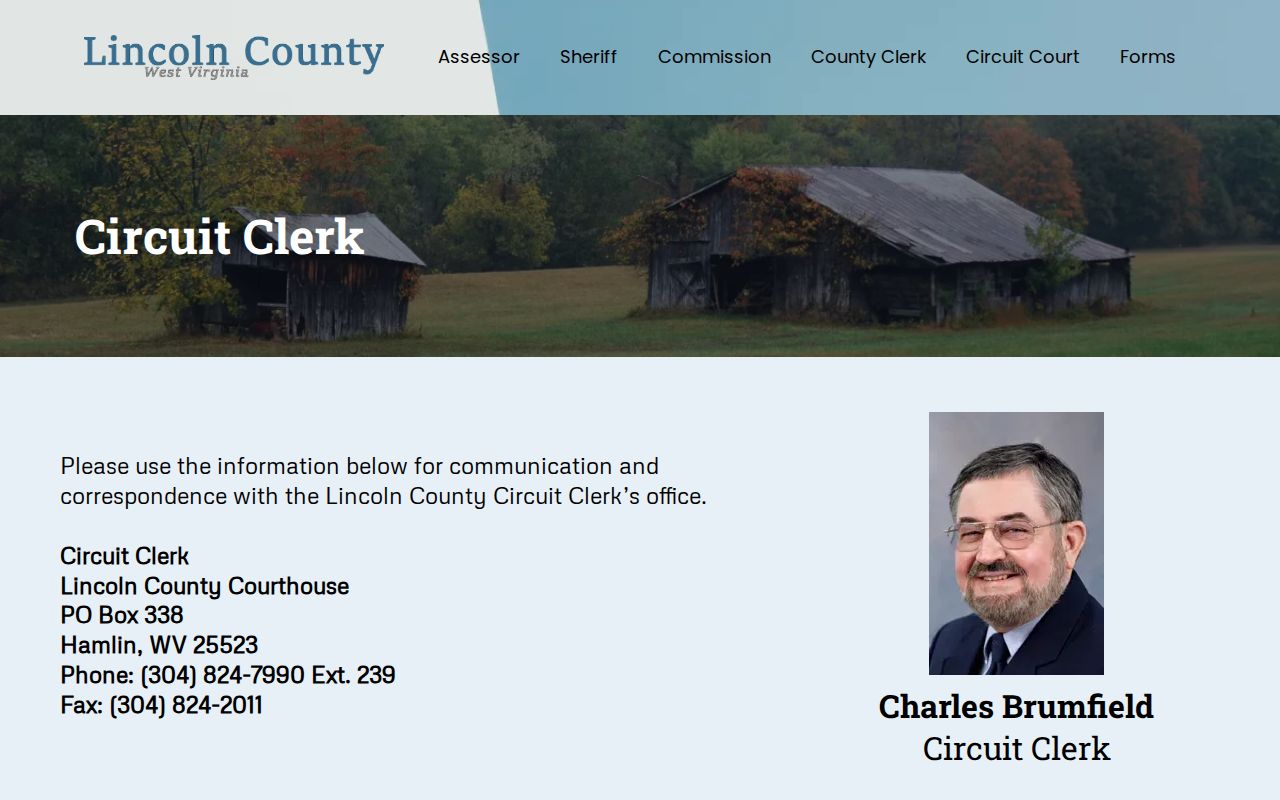
That clerk page ties the walk-up records counter to its core job: keeping the Circuit civil and criminal case files for Lincoln County.
Lincoln Court Record Types
A docket is a list, not the whole story. It tracks events in the order they happened. The court record is the larger file behind that list. What is public in any given file depends on the case, the court rules, sealing orders, and whether an item was admitted or filed.
- Circuit civil and criminal docket sheets, pleadings, motions, orders, judgments, and public exhibits.
- Magistrate misdemeanor, traffic, preliminary-felony, civil, small-claims, and unlawful-detainer records.
- Family Court public indices and orders, with most underlying file papers confidential.
- Transcripts or recordings obtained through the separate court-reporter or court-recording process.
- Certified or exemplified copies prepared for a purpose that requires proof of authenticity.
Probate, will, deed, marriage, birth, and death records belong to the Lincoln County Clerk, not to either court clerk. Aim a court-case request at the recording office and you will slow the docket search down. Worse, you may get the wrong kind of record entirely.
Court and County Records Differ
The word "clerk" trips up plenty of people in Lincoln County. The Circuit Clerk backs the courts. The County Clerk handles county recording and administrative duties. A civil judgment or criminal order is a court record; a deed, will, or marriage record is a county record, even though both offices may share nearly the same courthouse address.
| Office | Keeps | Request examples |
|---|---|---|
| Circuit Clerk | Circuit civil, criminal, and stored Family case files | Docket, motion, judgment, public Family order |
| Magistrate Clerk | Magistrate cases and documents | Traffic record, misdemeanor file, small-claims order |
| County Clerk | County recording, wills, vital and election records | Deed, estate record, marriage record |
The case caption settles any doubt. A document headed "Circuit Court" goes to the Circuit Clerk, and one headed "Magistrate Court" goes to the Magistrate Clerk. Do not ask the county recording office to certify a trial-court docket it does not even maintain.
Inside a Lincoln County Court Record
The case number is the thread that ties a file together. Docket lines list each filed or entered event in time order, and the documents behind them supply the actual text. What follows are common categories, not a promise that every public file holds each item.
| Case Number | The court identifier used for searches, calls, and copy requests. |
|---|---|
| Pleadings | Complaints, petitions, answers, and motions filed by parties. |
| Orders and Judgments | Signed court rulings, including the terms that control the parties. |
| Docket Sheet | The chronological index of filings, settings, rulings, and disposition. |
| Exhibits | Attachments or evidence, subject to filing status and access restrictions. |
| Transcript | A written record of proceedings, often ordered through a separate process. |
A filed motion is not a granted motion. The signed order tells you what the court actually decided, so read it. In the same way, a disposition label may need the judgment or sentencing order. Its full meaning may not be clear until then. The Lincoln County case lookup can pin down the file before you request documents.
Get the Lincoln Docket First
Not sure which document you need? Start with the docket. Its event lines give the filing date and the title of any order, motion, judgment, or notice that matters, and then you can ask for those named items. A specific request like that means fewer needless pages.
Docket versus document: The docket says an order was entered. The order states what the judge ruled. A certified copy proves the clerk authenticated that document.
WVPASS offers downloadable public Circuit documents from 1999 forward at 25 cents per page. A WVPASS PDF is convenient, but a portal download is not automatically a clerk-certified copy. MCRSearch covers Magistrate case information only. For the underlying public paper, ask the Magistrate Clerk.
Fees and Certified Copies
A plain copy just reproduces the record. A certified copy adds the clerk's attestation that it is a true copy. Exemplification goes further, a more formal authentication that may involve additional official certification. A transcript is different still. It is a written record of a proceeding, with its own ordering and cost process.
| Item | Researched amount or rule |
|---|---|
| WVPASS public document download | $0.25 per page |
| Circuit Clerk transcript or copy | $1 per page under W.Va. Code §59-1-11 |
| Magistrate copy | $0.25 per page under Magistrate Administrative Rule 11 |
| Magistrate written criminal-history search | $25 per name; public-terminal searches are excepted |
| Certification, exemplification, postage | Ask the clerk for a full quote; do not infer it from the page rate |
The $1 Circuit page rate is not always the whole cost of a certified packet. Page count, certification work, postage, and any requested service can move the quote. Before ordering an enhanced copy, ask what form the receiving agency or court requires.
Requesting Old Lincoln Court Files
Older Lincoln County court records take patience. WVPASS starts with public Circuit material from 1999. The Circuit Clerk's own local history says permanent records reach back to about 1920. Before that, a gap looms. An official courthouse history reports a 1909 arson fire destroyed county materials. A case missing online may still sit in a physical book. So the two absences are not the same.
For anything pre-1999, write to the right clerk. Give the full party names. Add the approximate year, the court, the case type, and any case number you have. Say exactly what you want. That could be a docket, a named order, the whole public file, or a certified copy. Add a phone number or email so the office can send a quote. Ask about return postage too. Locating a permanent book or a stored file can take the clerk some time.
One caution shapes any request. Ask for a record that already exists. The clerk's procedure does not call on the office to research a legal issue. It does not call for drafting a new case summary either. Keep the wording narrow and the staff can find the material that is actually there.
Lincoln Family Record Limits
Family Court Rule 6 draws a sharp line through the file. Orders and indices are public. Everything else stays confidential. That covers pleadings, exhibits, recordings, transcripts, and most other documents. Access must be authorized first. Family Court Rule 5 puts those files in the hands of the Circuit Clerk.
The practical result matters for any Lincoln County case lookup. A name in the public index is not permission to open the full Family file. Parties and authorized persons hold rights that a general requester does not. Ask the Circuit Clerk which public order or index can be supplied. Then use the court's own process if confidential material is legally open to you. Portal staff cannot bypass the rule, so do not ask.
Sealed Records and Public Access
West Virginia Code leans toward openness. Court records are generally open to inspection. Copies must be provided unless access is specially restricted. Two rules add balance. Trial Court Rule 10 protects the court's records function and permits reasonable access controls. Rule 15A governs public access in the e-file setting. It demands care with private information. A court order can seal material, but only when the legal standard is met.
Key access rules:
W.Va. Code §51-4-2 generally makes court records open and directs clerks to furnish copies unless restricted.
Trial Court Rules 10 and 15A govern court-record and electronic access, including limits for private information.
W.Va. Code §48-1-303 makes domestic-relations orders public while treating pleadings, exhibits, and other material as confidential.
West Virginia FOIA requires a reasonably specific request to the public body that keeps the record and provides response duties and exemptions.
FOIA cannot undo a court sealing order or Family Court confidentiality. Send any records request to the actual custodian. If access is denied, ask for the legal basis and follow the review process that fits that record.